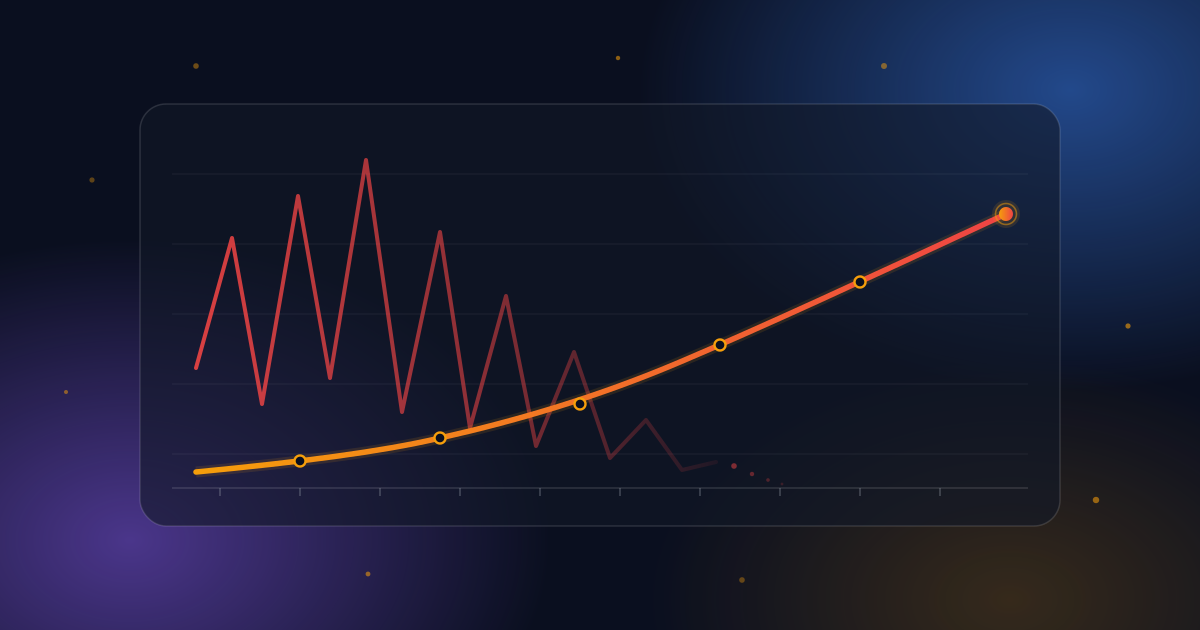
There is a certain kind of growth story that gets told at conferences. It has a hockey stick in it. It has a moment where everything changed. It has adrenaline. I used to tell stories like that about my own companies, and people leaned in every time.
Here is the story nobody leans in for: a restoration company answered its phone on the second ring for eighteen straight months, followed up on every estimate within a day, asked every customer for a review, and grew from eight leads a month to more than fifty. No moment where everything changed. No hockey stick you could point to a single decision on. Just machinery, running, every day, whether anyone felt like it or not.
I have built companies both ways. The exciting way and the boring way. The exciting way is more fun right up until it is the most expensive thing that ever happened to you. So let me make the case for boring.
Excitement is a cost center.
When a company runs on excitement, everything important depends on someone's energy level. The follow-up happens when the salesperson is feeling sharp. The documentation happens when someone finds a spare hour. The pipeline gets reviewed when the founder is anxious enough to look at it. This works, roughly, at small scale — because at small scale the founder can personally carry everything that falls through the gaps.
Then the company grows, and growth does the one thing growth always does: it exposes structure. More calls than one person can remember. More jobs than one whiteboard can hold. More promises than any amount of hustle can keep. The gaps that used to be caught by heroics start slipping through in volume, and the company begins leaking — revenue, trust, reputation, and eventually people. Nobody notices at first, because everyone is busy. Busyness is the best disguise a leak ever had.
The boring inventory.
When I go into a founder-led company today, I am not looking for what is exciting. I am looking at the dullest checklist you can imagine. Does the phone get answered? What happens to a lead after the first conversation — precisely, step by step, with a name attached to each step? When an estimate goes out, does anything in the system guarantee it gets chased, or does chasing depend on someone remembering? When a job finishes, does a review request go out every time, or only when someone thinks of it?
None of these questions is interesting. That is the point. Every one of them is a place where money either flows or leaks, and no one posts a screenshot of a follow-up sequence that fired on time. The work that compounds is almost always the work that is invisible when it succeeds.
This is where most AI implementations go wrong.
The AI era has given the excitement addiction a new outlet. Owners come to me wanting the impressive thing — the agent, the chatbot, the demo that makes the leadership team gasp. I call it AI theater, and it fails for the same reason exciting growth fails: it is not attached to the boring machinery.
The AI that actually earns its keep is embarrassingly mundane. It drafts the follow-up email so the follow-up actually happens. It transcribes and files the job notes so the documentation actually exists. It flags the estimate that has sat for six days with no contact. It does the work that was always supposed to happen and mostly did not. Nobody gasps at the demo. But six months later, fewer things have disappeared — and "fewer things disappeared" is what durable growth actually looks like from the inside.
Boring is not the same as small.
I want to be careful here, because "boring" gets misheard as a lack of ambition. It is the opposite. Choosing boring is a bet that your ambition deserves infrastructure. The founders I respect most have enormous ambitions — and they express those ambitions in checklists, operating rhythms, dashboards, and documented handoffs, because they intend to still be standing in ten years and they know adrenaline has a short shelf life.
There is a version of this in personal discipline, too. The season of my life when everything was exciting was also the season that ended in collapse. The rebuild happened on routines so unremarkable they would bore you to read about: the same review of the same numbers, the same follow-through on the same commitments, week after week. Durability, in a company or a person, is mostly the decision to stop outsourcing consistency to your emotional state.
The test I use.
Here is the question I ask founders when they show me a growth plan: does this plan still work in a month when nobody is excited? Not a bad month — an ordinary one. A month with a sick estimator, a distracted office manager, and a founder buried in something else. If the plan only works when everyone is fresh and motivated, it is not a plan. It is a mood with a spreadsheet attached.
A real growth system assumes ordinary months. It assumes people forget, get tired, and cut corners under pressure — and it is built so the important things survive anyway. That is what I mean when I say durable growth is boring on purpose. The boredom is not a side effect. It is the design goal. You are deliberately building a company where the critical motions are so routine, so owned, and so well-instrumented that they no longer require anyone's excitement to happen.
Exciting companies make great stories. Boring companies make payroll for twenty years, fund quiet fortunes, and hold when the market turns. Build the boring one. You can always tell exciting stories about it later — from a position of strength.
— Isaac Voss